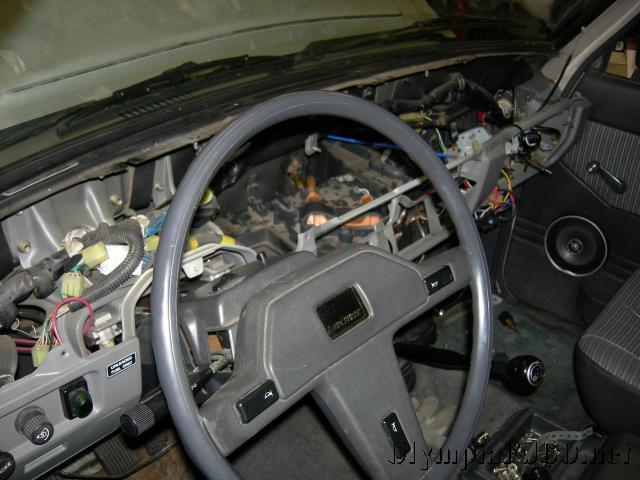
Having to install a heater core in the FJ60 Land Cruiser can be one of the worse jobs we have to do. It doesn’t sound bad, but as you start looking into all the steps it becomes apparent this isn’t just a simple operation, or is it. The FSM calls for the dash to be removed, then to remove the A/C evaporator module (if equipped) then the heater core module.
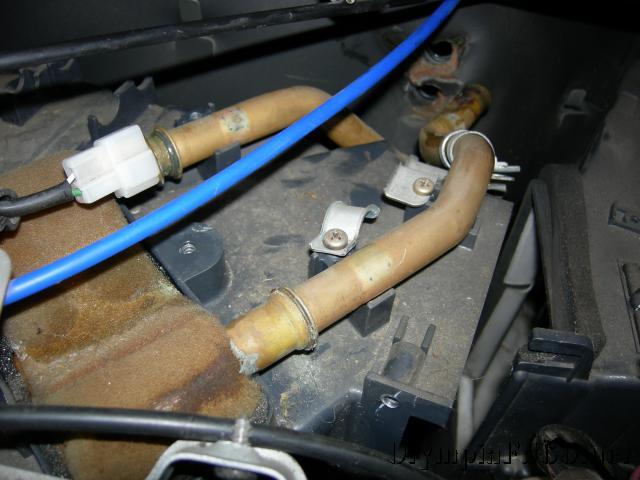
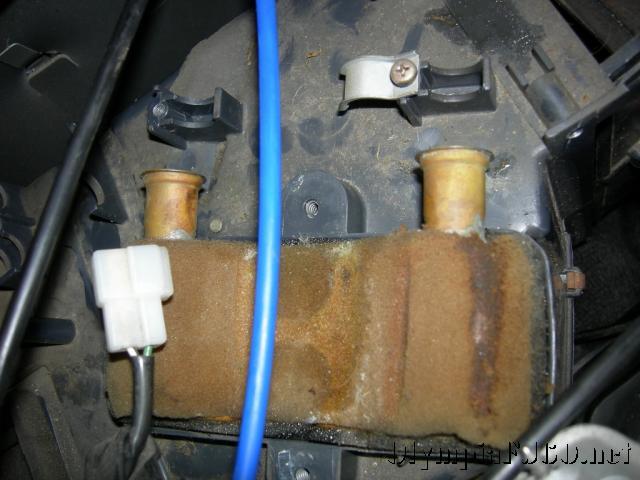
The heater core is held in its case by a bracket across the top and little clamps over the tubes. The tubes are held in the heater core with little clips. With the tubes attached there will not be enough clearance to remove the heater core with the case in the vehicle.
While you will still need to remove the entire dash and heater ducts. If you remove the tubes first, pull the cases away from the firewall you will be able to remove the heater core without disconnection the A/C. I used a pair of screw drivers to pry the somewhat stuck heater core out of the case. Once out I made sure to clean out any old coolant that was sitting in the bottom of the case. The new heater core did not come with any of the foam that is used to seal the core in the case. All that my local parts store had was camper tape and appears to work just fine. The new core also didn’t come with new o-rings. Having an assortment on hand is always handy and I was able to find two of the proper size.
With the new heater core installed and tubes mounted in place the dash was reassembled, hoses connected at the fire wall and the coolant refilled. It may be advisable to attach the hoses and refill the cooling system before finishing the dash work to spot any leaks.
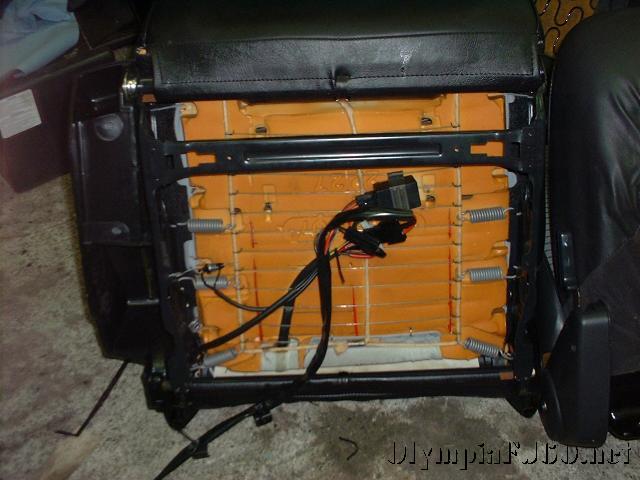
I have been less impressed with the seats in my ’87 FJ60 since I bought it. They are thinly padded with a weak frame (for someone of my size). I installed seats from a Volvo 240 wagon a few years ago and this was a huge improvement. Better padding, solid frame, just not that adjustable. I regularly pursue the local wrecking yards in search of a better seat that will fit. I have looked at other Toyota seats, BMW, mini-van and others as well. I have never found seats that I thought would both fit, and meet my needs. During a visit to my neighbor hood wrecking yard last summer I came across a Mercedes M350 that had been badly wrecked. They looked like they would fit and both the drivers seat and the passenger had 8 way adjustable power as well as seat heaters.
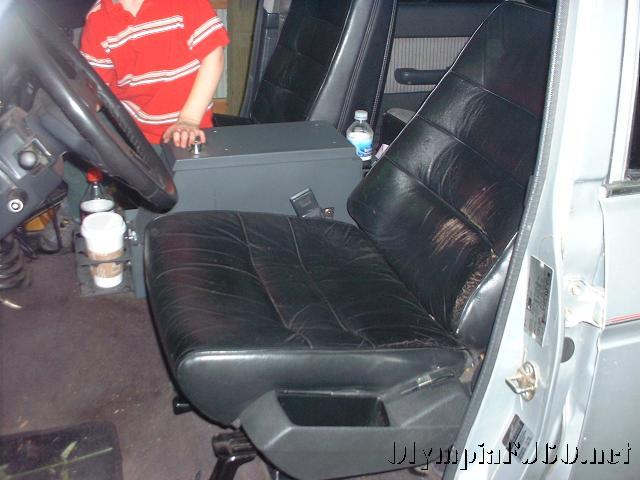
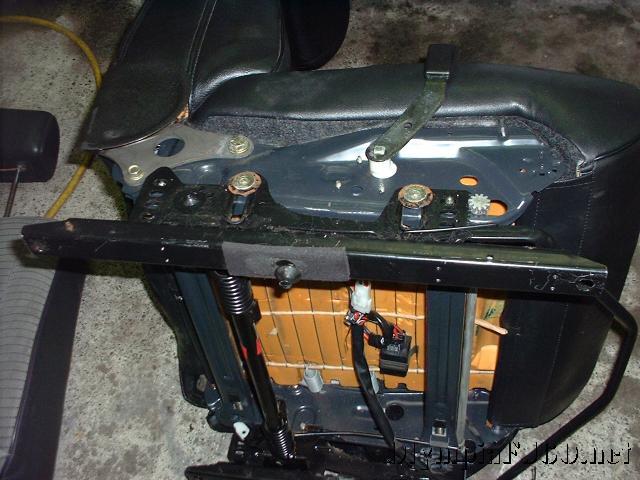
I never did a write up of the Volvo seats but I will include a few pictures before continuing onto the Mercedes seats.
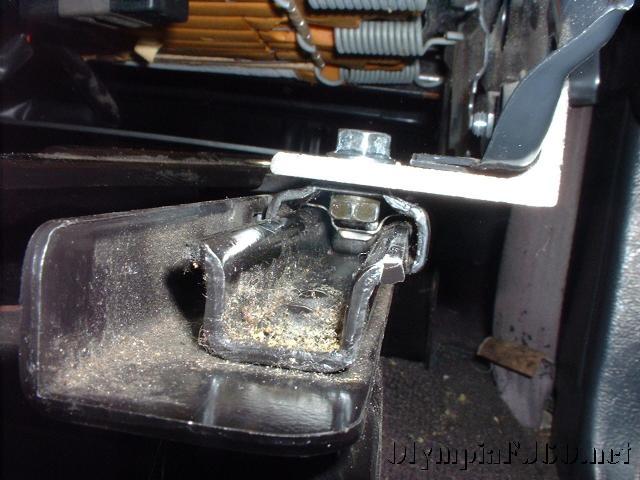
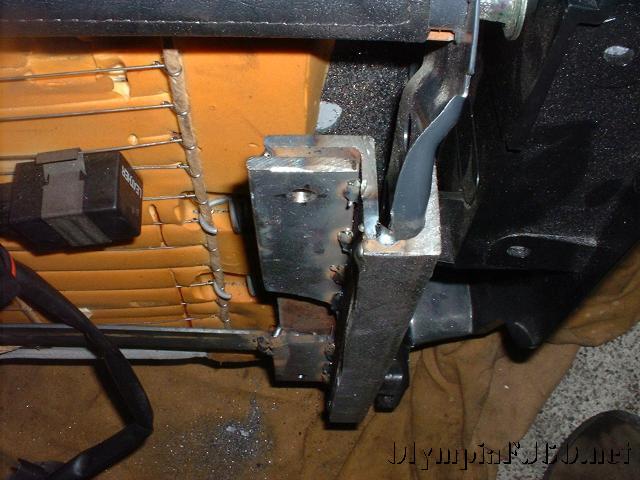
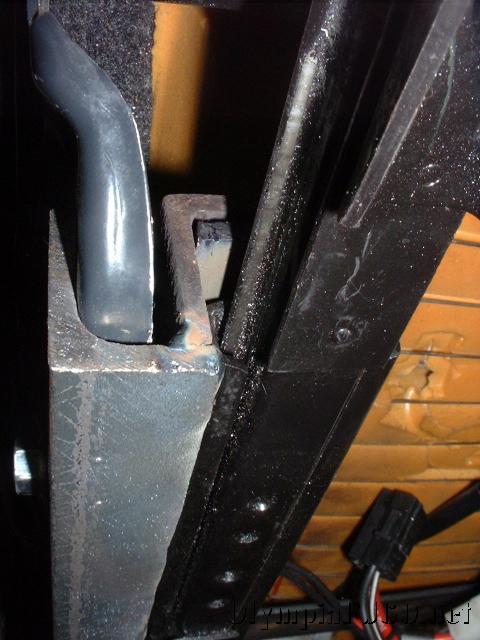
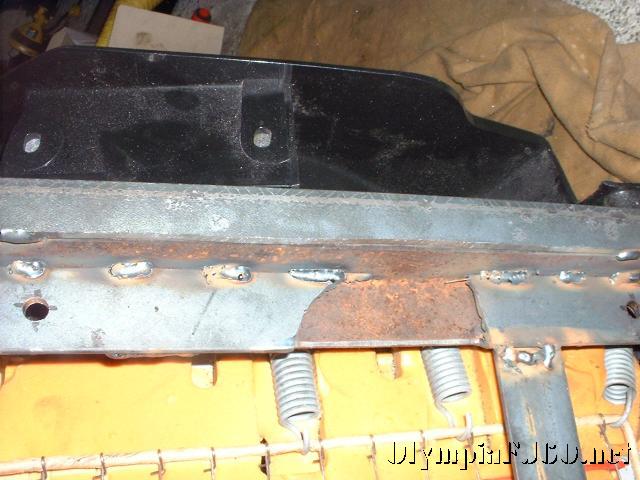
The factory slider was removed and a bracket was made to fit the Toyota slider to the seats.
I am 6’6″ and the first bracket made the seat sit too high. This left my head in the headliner with the seat back at a comfortable position. I figured I could lower the seat another 1.5″ and modified the drivers bracket to fit this.
This bracket was pretty tight to the slide and it was difficult to adjust when slid all the way back.
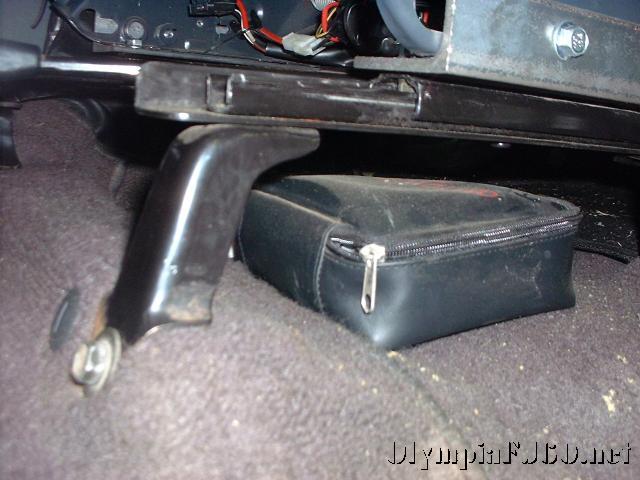
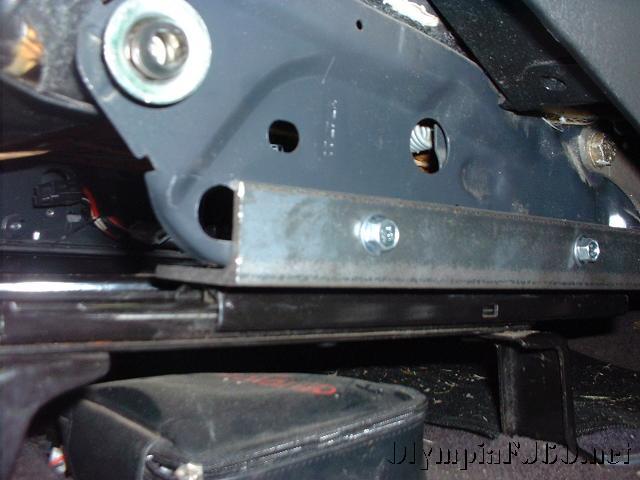
Now for the Mercedes seats. This was a much easier bracket to make. Instead of welding angle, all I had to do was bend up some 2″x.25″ bar stock purchased from Lowe’s. To bend the bar I used a little bender from Harbor Freight. This was the max size the bender could handle but it was adequate.
I drew up a sketch in Google Sketchup with measurements from the truck floor. Now, the floor pan on the ’86 and ’87 trucks is different than the earlier trucks. The earlier trucks have a higher raised spot that the sliders attach to. This may be enough that these seats would not fit for tall people.
Once I had my brackets I drill the floor mounting holes and loosely bolted them to the floor. I then set the drivers seat in the truck to get an idea of location. Once selected, I marked the brackets for drilling the seat mounting holes. Brackets bolted to the seats it was time for test fit. I got lucky on this one and the seats fit. They still sit a little high in the back and I have to have the rear adjusted all the way down with the front all the way up. I have room to lower the back of the bracket about 2″. I will add photos to this article once I have reworked the brackets.
Now for the wiring. There are two types of seats in the ML350, power with memory and just power. I ended up with the power with memory. The power only may have been a little easier to wire but this is what I had. On the power with memory seats, each seat has a power seat module (PSM). This is a little relay/computer box that is attached to the bottom of the seats. All of the motors and motor sensor connect to this box as well as input from the vehicles extended activity module (EAM). My seats came with the PSMs (be sure to get the harness from the car to the PSM). The EAM performers many functions in the car none of which are needed here except power to the PSM.
It was a little confusing at first but I figured out the wiring. There is two power inputs to the PSM, 12v+ 30amp to the seat functions and 12v+ 20amp for the seat heaters. There is also a ground wire, and two wires to the heated seat switch. There are two positions for the seat heaters, regular and rapid heat (hi). This again had me confused for a while as I kept trying to apply 12V+ to the wires with no action from the relays. After looking at the wiring for a 4th or 5th time, going to the computer to do some additional research, it dawned on me that the heater relays may be controlled with 12v-. After a few tests I had completely functioning power heated seats.
Is it worth it? I think both the Volvo seats and the Mercedes seats are a great improvement. Not only do they look good (leather), but the are more comfortable and have a much more rigid frame. I think with the ease that the Mercedes brackets were made and how nicely they fit in the 60, the would be my preference every time. They may be much harder to find though.